Saturday Heritage Fair – Leicester’s Stories on Soar Sound
Podcast: Play in new window | Download
John Ghent was walking back to his car one Friday night when he found Church Gate almost empty. He remembered it as a place where thousands of people went out at weekends, himself included. He made a short video about the change, and people began sharing their own memories. In this Soar Sound podcast, he tells Rob Watson how that response led him to make more films about Leicester’s streets and clubs, and to ask why familiar places change.
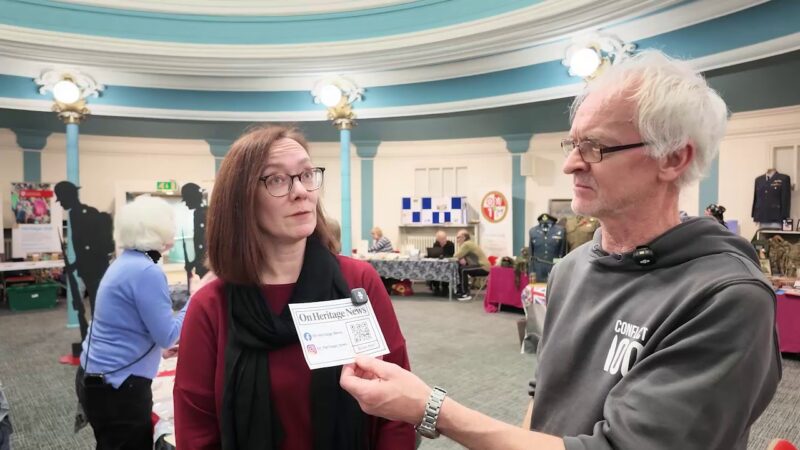
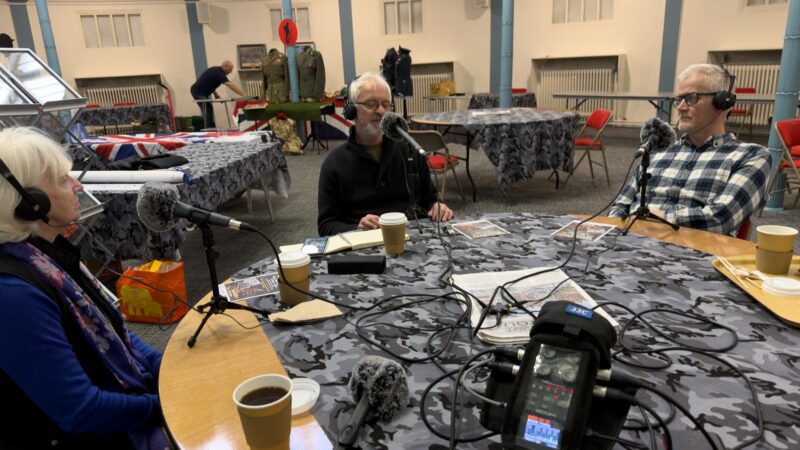
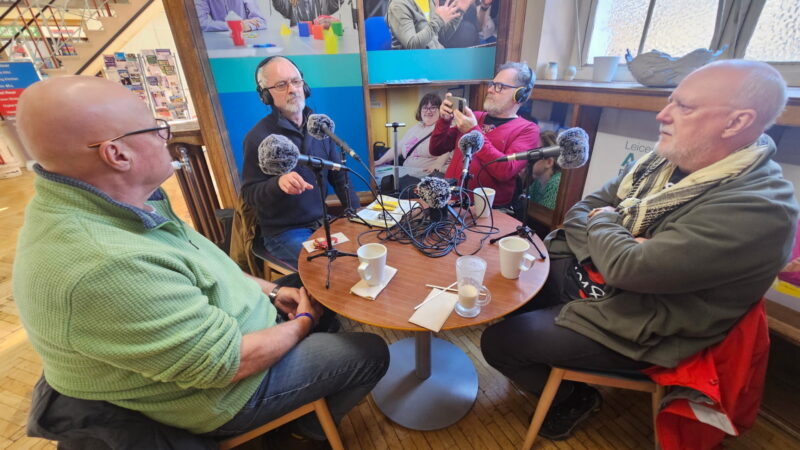
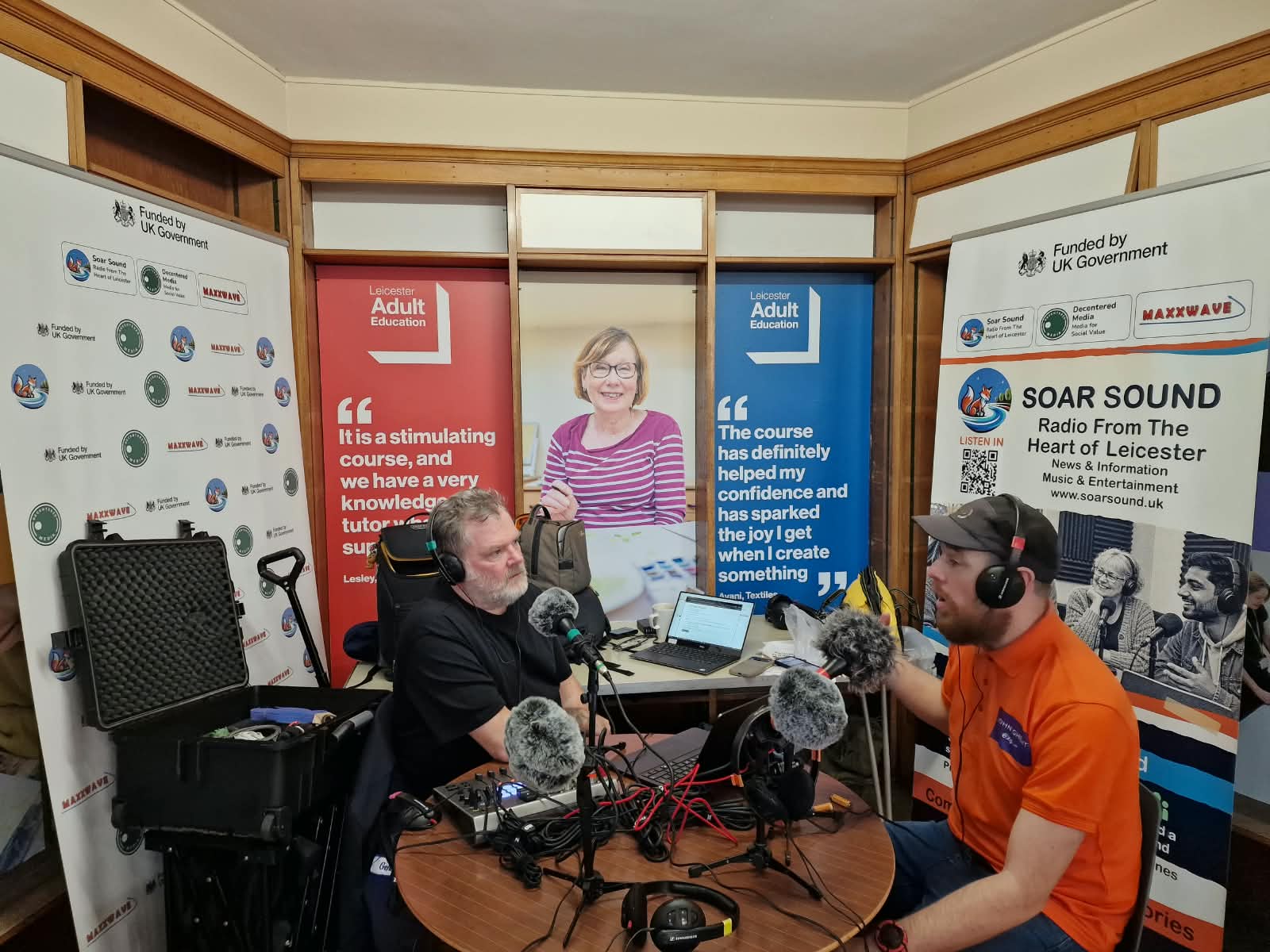
Rob recorded ten conversations at the tenth Saturday Heritage Fair, held at Leicester Adult Education Centre on Belvoir Street on Saturday 21st November 2026. Fair organiser John Coster sets the scene. He explains where visitors can get help when their family history research reaches a dead end, points out the archive films from the Media Archive for Central England and introduces the University of Leicester’s Heritage Hub, which partnered with the fair. Saturday Heritage Fair programme
From Family Memories to the Archive
Soar Sound presenter Matt Axon stops at a display with a piece of shrapnel connected to a Lancaster bomber. His great-uncle was a rear gunner in a Lancaster, and seeing the fragment gives him something tangible to connect with that part of his family’s history. He also talks about coming to the fair with Brotherhood Legion and why he wanted to speak with people about the difficulties veterans can face after leaving the forces.
Evington Echo editor Helen Pettman takes us to Knighton House, which served as a hospital in Evington during the First World War. Researching it for a project aimed at local schools led her to Gwendoline Whittington, the quartermaster who ordered equipment and helped with fundraising. Helen also describes a dice game she tried at the fair. Players use their throws to build up a map with buildings, trees and water supplies, giving children a way to explore how a place takes shape.
Dr Liam McCarthy traces his research into Black American GIs in wartime Britain back to a conversation in a pub. He grew up in Leicester and was surprised to learn about racial violence between American troops stationed here. He explains how segregation on US bases affected the men’s lives and how a postmistress’s notebook, found under the floor of the old Gaddesby post office, helped him date their arrival in Leicestershire. A suitcase of letters between a GI named Louis and his future wife, Pat, let him tell part of the story in their words. There’s a brief interruption when Helen McCarthy drops by to say people from his talk are looking for copies of the book.
How We Tell Difficult Stories
Ope Akeroro of RoRo Production talks about the small things that get him started on a story. A phrase overheard in the street or something that happens at home can give him an idea worth following. He introduces his children’s animation Amani Groove Quest and describes how a David Olusoga documentary prompted him to think about telling a story through the Benin Bronzes.
John and Shruti from The Ebb Leicester bring the conversation back to families. John explains how the group supports people who have a relative or friend in the criminal justice system. The discussion turns to what happens when family research uncovers a prison record and how people might talk about it. Shruti draws on her experience in behaviour-change counselling to explain why listening carefully and taking people’s feelings seriously matter in difficult conversations.
What Visitors Take Home
Ayyub and Yusuf tell Rob about the comics, wartime uniforms and games they found as they walked around the fair. Ayyub remembers putting on headphones for a First World War display that directed him towards different objects. Yusuf describes making a map with dice. Charmaine, who took them round, remembers watching them work out how to dial an old telephone.
Leicester Community Heritage Champion Philomena Imade-Omoregie Osagie explains how she’s documenting West African food traditions with cooks from Cameroon, Côte d’Ivoire, Ghana and Nigeria. Egosa from Matilda’s Kitchen describes the red velvet cake she brought, made with yoghurt and honey, and explains why jollof rice is the dish people look for at a celebration. Philomena recalls teaching young people to make moi-moi at a workshop in St Matthew’s and talks about how she hopes to preserve the project’s work and share the recipes. Leicester’s Community Heritage Champions
In the final interview, Dr Kim Sadique describes working through photojournalist Jim Hooper’s archive of the war in Bosnia for the Conflict Memory Education Centre. A map marked with front lines drew visitors to the display and prompted questions about the photographs alongside it. Kim hopes to identify some of the refugees in those pictures and get copies back to survivors and families who may have few photographs of their loved ones from that time. Dr Kim Sadique
Listen to the Podcast
The start times are estimated from the transcript and may shift in the final audio.
- 0:00 – Rob Watson and John Coster
- 4 mins – John Ghent
- 13 mins – Matt Axon
- 19 mins – Helen Pettman
- 24 mins – Dr Liam McCarthy, with a brief appearance by Helen McCarthy
- 42 mins – Ope Akeroro, RoRo Production
- 47 mins – John and Shruti, The Ebb Leicester
- 58 mins – Ayyub, Yusuf and Charmaine
- 1 hr 9 mins – Philomena Imade-Omoregie Osagie and Egosa, Matilda’s Kitchen
- 1 hr 20 mins – Dr Kim Sadique, Conflict Memory Education Centre
Transcript: Download