Health, Movement and Everyday Life – Community Assessment Day at Braunstone Leisure Centre
Podcast: Play in new window | Download
What does it mean to be active? It might mean going to the gym, swimming or cycling, but it can also mean walking to the shops, taking the children out, meeting friends or simply finding more reasons to get up and move during the day.
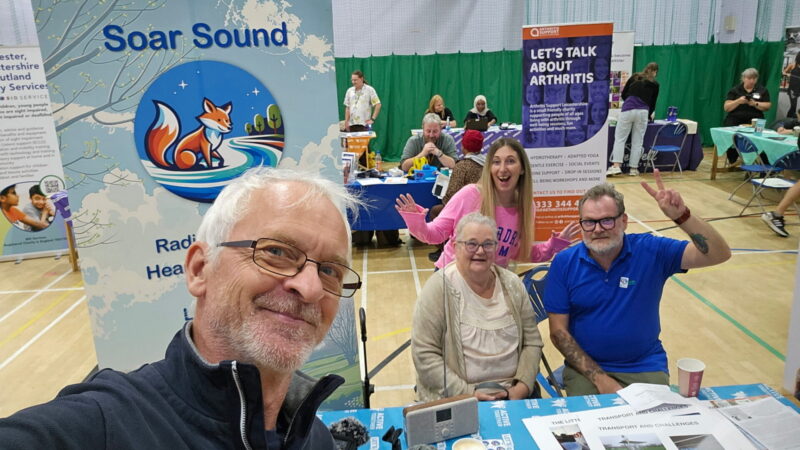
That was one of the messages coming through clearly when Soar Sound joined the Community Assessment Day at Braunstone Leisure Centre, where local residents, community organisations and health professionals came together to talk about health, movement and wellbeing.
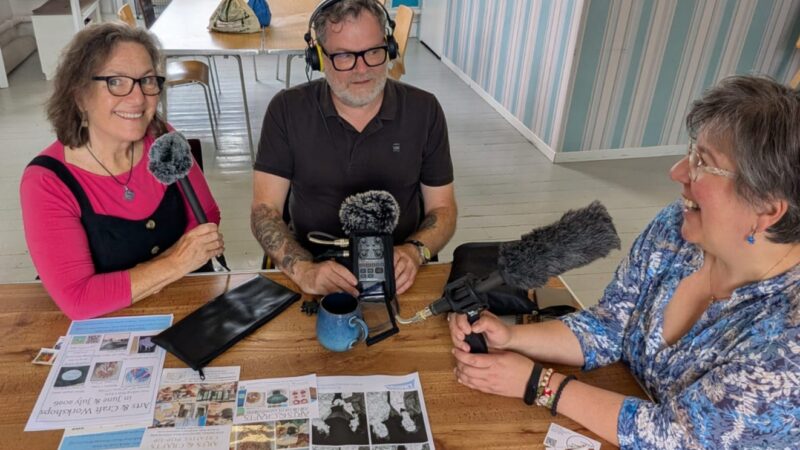
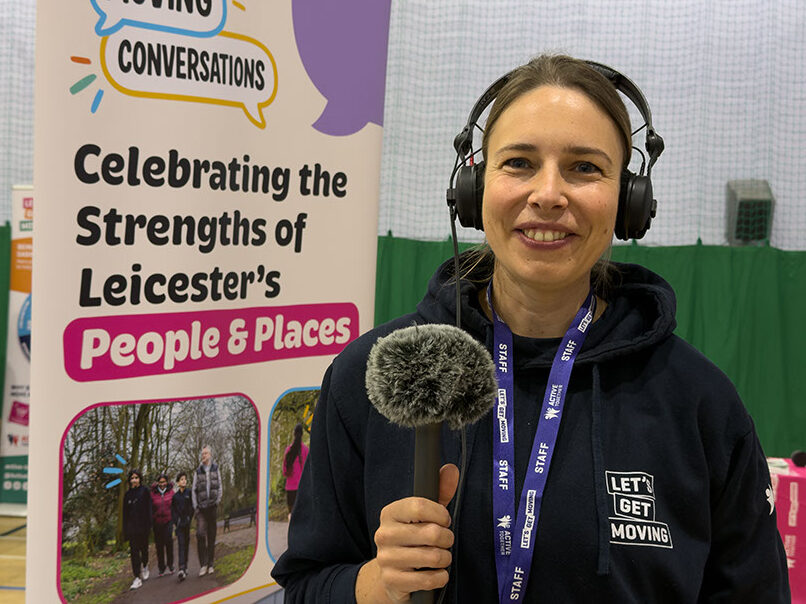
Working alongside Karolina and the Moving Conversation initiative, Soar Sound spoke with people taking part in the event and with organisations offering practical support across Leicester and Leicestershire.
Starting With Everyday Movement
Karolina explained that Moving Conversation is interested in the ordinary things people do to stay active. Exercise does not have to mean competitive sport or an intensive fitness programme. Walking, shopping, spending time outside with friends and family, swimming and other everyday activities can all help people keep moving.
The challenge is that everyday life often gets in the way. Work, childcare, transport and the cost of organised activities can all make it harder for people to participate.
The conversations at Braunstone also suggested that many people are already doing more than they might give themselves credit for.
Several people interviewed during the day described regular gym sessions, swimming, walking in Leicester’s parks and exercising at home. One seventy-two-year-old participant spoke about gradually increasing the distance he runs at the gym and using activity monitoring to encourage himself to keep moving.
His aim for the future was straightforward: to keep going, remain able to get up and about independently and maintain his physical and mental fitness as he gets older.
Health Is Also About Confidence
The organisations gathered at Braunstone demonstrated how closely physical health, mental wellbeing and confidence are connected.
Jess, a physiotherapist with the Falls Prevention Service at Leicestershire Partnership NHS Trust, explained how a fall can sometimes lead people into a cycle of reduced activity. Someone becomes worried about falling again, stops doing things they previously enjoyed, loses strength and then becomes more vulnerable to another fall.
Falls prevention therefore involves more than exercises. The service looks at strength, balance, walking patterns, confidence and the home environment, including practical issues such as footwear, clutter and everyday movement around the house.
The underlying aim is to help people retain or rebuild their independence.
A similar emphasis on confidence came from the NHS Talking Therapies team. Their work supports people experiencing stress, anxiety and other difficulties associated with everyday life, including caring responsibilities, long-term health conditions, education and employment.
Activities such as drumming were described as one way of helping people connect with others, relax and open conversations about mental wellbeing without making those conversations unnecessarily clinical.
Talking About Health Issues We Often Avoid
Some health problems are particularly difficult for people to discuss.
Amina Yakuub, a pelvic health physiotherapist, explained that pelvic health problems can affect people of different ages and can have a profound effect on everyday life.
Problems with bladder or bowel control, pain or other symptoms can lead people to organise their lives around access to toilets, avoid exercise or withdraw from activities and relationships.
Her message was that people should not simply assume these problems are something they have to live with. Assessment and specialist physiotherapy can help people understand what is happening and identify appropriate treatment.
Arthritis Support Leicestershire presented another approach to living with a long-term condition. Conrad described the charity’s work around exercise, nutrition, pain management and mindfulness.
One of the ideas discussed was the “spoon theory”, which encourages people to think about the amount of energy available to them during a day and how different activities use that energy. Rather than measuring success against what somebody used to be able to do, it can help people recognise what they have achieved while avoiding exhaustion from trying to do too much at once.
Connecting Health With Work and Daily Life
Health also affects people’s ability to work.
The Work Well service supports people whose physical or mental health may be making it difficult to remain in employment, return after a period away or find work. Support can include health coaching, advice about conversations with employers and connections with other services.
Support for Carers Leicestershire similarly highlighted the needs of people whose own wellbeing can easily be overlooked because they are caring for somebody else.
The service offers information, assessments, support groups and opportunities for carers to talk through the pressures they experience. Supporting the carer is an important part of sustaining the wider caring relationship.
Health Starts in the Community
Leicester City Council’s Public Health team brought the conversation back to prevention and everyday community life.
Their work includes encouraging people to take up health checks, promoting children’s oral health and supporting activities such as gardening.
Libraries across Leicester are involved in gardening initiatives, including access to seeds for library members. Gardening provides a simple example of how physical activity, mental wellbeing and social interaction can come together in an activity that does not necessarily feel like formal exercise.
The environment around us matters as well.
Karolina brought photographs created through a PhotoVoice project in which local people documented features of Leicester that can either encourage or discourage people from being active. Traffic, transport, obstructed or unpleasant routes and concerns about safety can all affect whether someone feels comfortable walking around their neighbourhood.
Making Leicester more active is therefore not simply a matter of telling individuals to exercise more. It also means thinking about the places, services and opportunities that make activity possible.
Listening to the Community
At the end of a busy day, Karolina reflected on what had surprised her.
She had expected to talk about the need for people to become more active, but instead found many people, including older residents, already making a considerable effort to keep moving.
She also saw the value of bringing many different organisations together in one place. Instead of expecting people to know which service they need, an event like the Community Assessment Day allows residents to talk directly with specialists, ask questions and discover forms of support they may not previously have known existed.
There was another lesson from the day too.
Asked what she had learned from interviewing people for radio, Karolina’s answer was simple: listen.
Community reporting works best when it creates space for people to explain their own experiences rather than telling them what they ought to think.
That principle applies equally well to health and community development. If Leicester wants more people to be active, connected and healthy, the starting point is not simply another instruction to exercise.
It is listening to what people already do, understanding what gets in their way, and connecting them with the opportunities and support that can help them take the next step.
Listen to the Soar Sound podcast from the Community Assessment Day at Braunstone Leisure Centre to hear the conversations with residents, health professionals and community organisations in their own words.