Spotlight on Heritage – Leicester’s Old Town Festival 2026
Podcast: Play in new window | Download
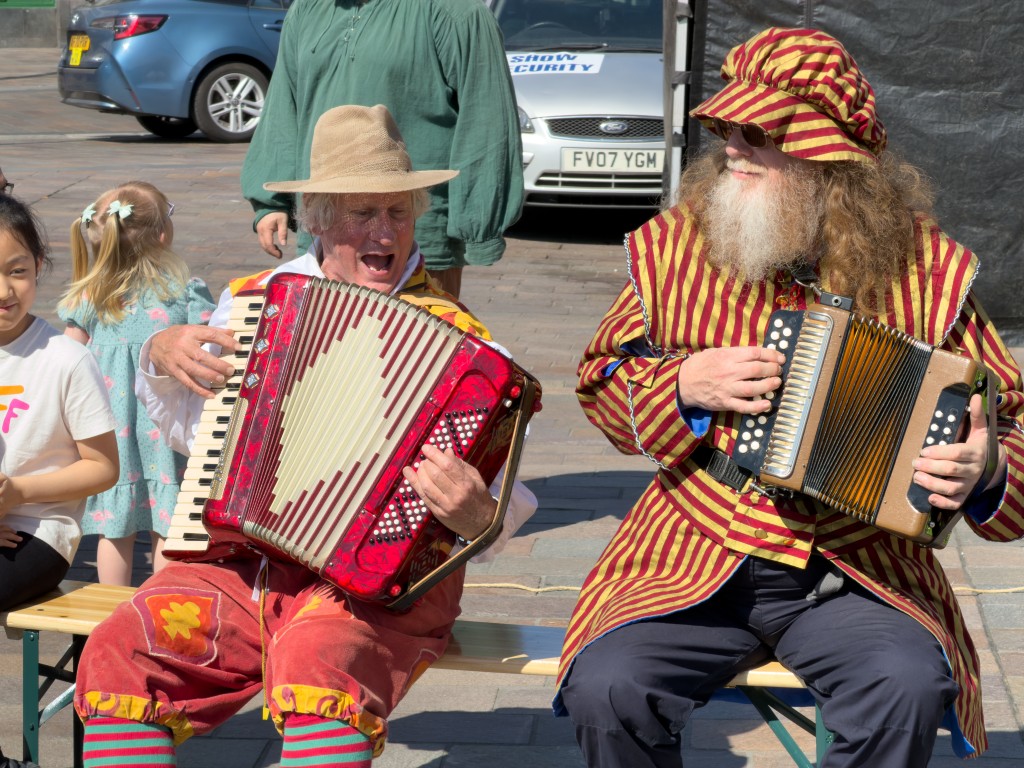
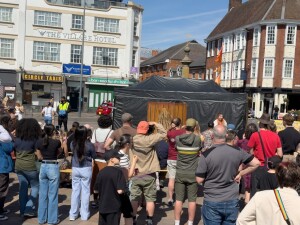
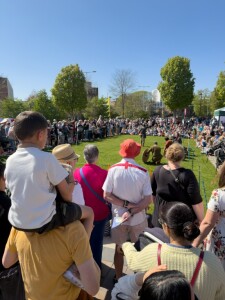
Leicester’s Jubilee Square, under clear spring light on the 25th of April, becomes something more than a civic space. It turns into a meeting point between timelines, where everyday life intersects with fragments of the past. The Old Town Festival, spread across the cathedral, Guildhall, and Jewry Wall, offers a reminder that heritage is not static or distant. It is lived, negotiated, and, crucially, shared.
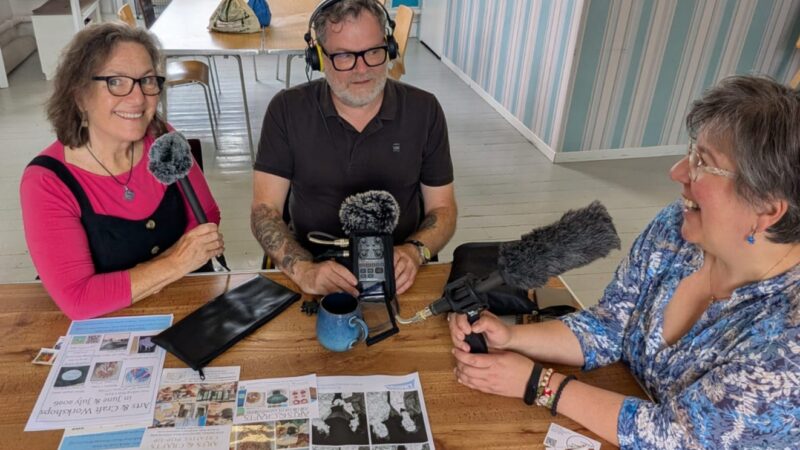
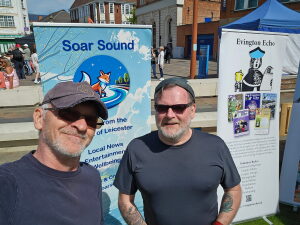
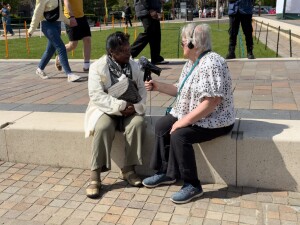
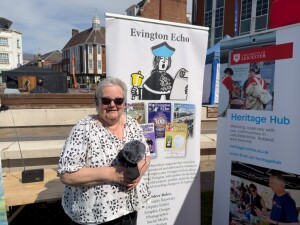 The accompanying podcast captures this movement in real time. Conversations unfold not as formal interviews but as exchanges rooted in curiosity, humour, and observation. What emerges is a textured account of how people encounter heritage when it is made accessible on their own terms. Accessibility here is not framed as simplification, but as openness. The absence of cost, the informality of engagement, and the freedom to interpret all contribute to a form of participation that is both personal and collective.
 Across the square, historical reenactments and storytelling sit alongside family activities and casual encounters. Vikings, Civil War regiments, and Roman soldiers are not presented as authoritative exhibits but as conversational entry points. Their presence invites questions rather than delivering conclusions. In this setting, mythology and history blur productively. Norse cosmology, with its layered worlds and heroic narratives, is recounted alongside local legends such as Black Annis or the enduring tale of Richard III. These stories are not offered as fixed truths, but as evolving interpretations shaped by memory, retelling, and context.
 What becomes apparent is that heritage operates as a framework for dialogue about the present. Discussions move easily from medieval belief systems to contemporary concerns about education, media consumption, and social understanding. The contrast between slow, reflective engagement and the speed of digital platforms is particularly striking. The suggestion is not that one should replace the other, but that depth still requires time. Reading, listening, and sustained conversation remain essential practices for understanding complexity.
 Equally significant is the emphasis on ordinary experience. Much of what constitutes lived history does not reside in official archives or institutional collections. It exists in personal stories, family traditions, and everyday practices that rarely achieve formal recognition. The festival creates a temporary space where these narratives can surface. An eighty-year-old recollection of post-war London, for example, sits alongside reflections on migration, cultural change, and the persistence of local customs.
 This raises a broader question about what is preserved and what is overlooked. Heritage institutions often prioritise figures and events deemed historically significant, yet the podcast highlights the value of marginal or unrecorded experiences. Letters never archived, memories never formalised, and practices carried informally across generations all contribute to a richer, more inclusive understanding of the past.
There is also a recurring theme of movement. Stories, traditions, and people travel. Whether through migration, labour patterns, or cultural exchange, heritage is continually reshaped by displacement and adaptation. The presence of Caribbean folklore, Eastern European narratives, and British local myths within the same event illustrates how layered and interconnected these histories have become.
 The overall effect is not a singular narrative of Leicester’s past, but a multiplicity of perspectives. Heritage, in this sense, becomes less about preservation and more about participation. It is a process of engaging with complexity, acknowledging contradiction, and allowing space for interpretation.
The podcast offers a record of this process as it happens. It captures voices that might otherwise remain peripheral and situates them within a shared civic context. In doing so, it aligns with a broader understanding of community media as a platform for dialogue rather than dissemination.
The question that remains is how these forms of engagement can be sustained beyond the festival setting. If heritage is most meaningful when it is accessible, conversational, and grounded in lived experience, then the challenge is not simply to present the past, but to create ongoing opportunities for people to encounter and interpret it together.
Listen to the full podcast to hear these conversations unfold in their own words, shaped by the atmosphere, spontaneity, and complexity of the day.